The problem
Hard decisions, made quickly, with partial information.
Farmers make dozens of consequential decisions a season, often with limited access to expert advice and under real economic pressure. This page sets out the challenges AgroExpert is designed to address - and is careful to separate what is established from what this project hypothesises.
01Six challenges
Why crop-health decisions are difficult.
- 01
Symptoms are ambiguous
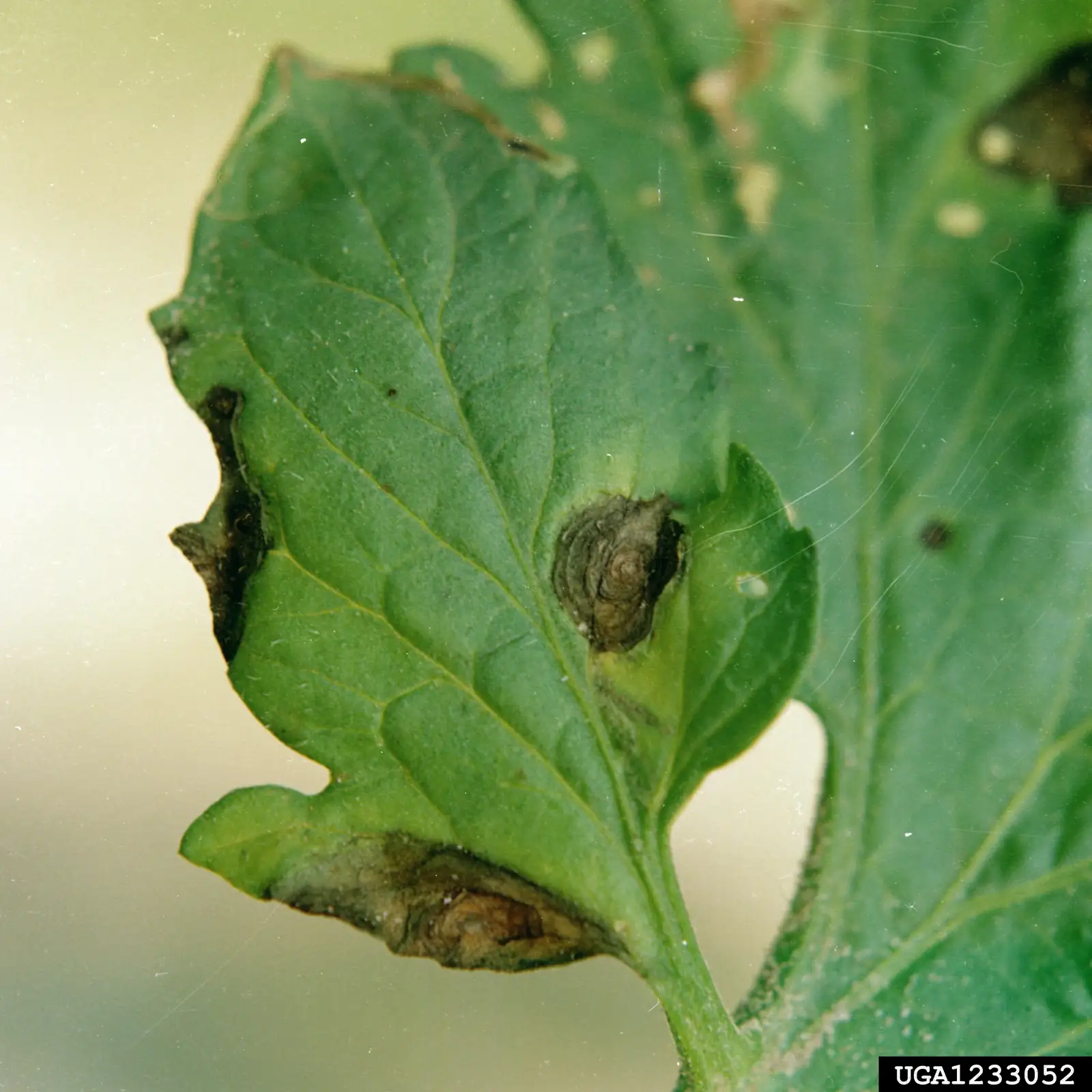
Yellowing, spotting, wilting and stunting can each come from disease, nutrient deficiency, pest feeding, soil chemistry, water stress or weather. Telling them apart often requires knowing what happened before the symptom appeared.
- 02
Inputs applied without a diagnosis
When the cause is uncertain, it is understandable to reach for a fertilizer or spray “to be safe.” But an input that does not address the actual cause adds cost and environmental load without solving the problem.
SeeUnited Nations Environment Programme (2022) (opens in a new tab)FAO (web) (opens in a new tab)
- 03
Pesticide exposure and misuse
Pesticides vary greatly in hazard. Risks rise when labels are hard to read, protective equipment is unavailable, or pre-harvest intervals are not observed.
SeeWorld Health Organization (2020) (opens in a new tab)World Health Organization (2022) (opens in a new tab)FAO and WHO (2014) (opens in a new tab)
- 04
Commercial information asymmetry
In many places the most accessible adviser is the person selling the product. That advice can be knowledgeable and well-meant, but the incentive structure is not neutral.
- 05
Fragmented, hard-to-apply guidance
Good agronomic guidance exists, but it is spread across extension bulletins, research papers and regulations - often in a language or format that does not fit a decision in the field.
SeeGovernment of Nepal (web) (opens in a new tab)FAO (2011) (opens in a new tab)
- 06
Soil degradation and water pollution
Nutrient losses and pesticide residues can reach groundwater and surface water, and long-term practices shape soil organic matter and structure.
SeeFAO and Intergovernmental Technical Panel on Soils (2015) (opens in a new tab)FAO and UNEP (2021) (opens in a new tab)United Nations Environment Programme (2022) (opens in a new tab)
Not a story about careless farmers
Input decisions are shaped by access to information, the advice that is available, product availability, credit, market prices, labour and the cost of being wrong. Improving the information available at the moment of decision is one lever among many.02Problem map
How conditions become decisions, and decisions become costs.
01 · Conditions
The situation a farmer is in
02 · Decisions
What can go wrong as a result
03 · Consequences
Who and what bears the cost
Selected
Ambiguous symptoms
Different causes produce similar visible signs.
↑ Arises from
A starting condition.
↓ Can lead to
Misdiagnosis, Continued crop loss, Wasted cost
A simplified conceptual map for discussion - not a causal model. Real situations involve many more factors, and these pathways vary by place, crop and market.
03Need vs. habit
A genuine input requirement is not the same as an application.
A genuine input requirement
- A specific cause has been identified with reasonable confidence.
- Soil tests, crop stage or scouting show the need - not just a calendar date.
- The input is suited to that crop, cause and stage.
- Lower-risk measures are insufficient or too slow for the level of pressure.
- It is applied according to the label or validated local recommendation.
An unnecessary application
- The cause is unknown, or a different cause (water, soil pH, weather) explains the symptom.
- Applied “just in case,” or because a neighbour or seller suggested it.
- Duplicates a nutrient the soil already supplies.
- Pressure is below the level at which treatment pays off.
- Exceeds or ignores label directions.
04Environment
Agriculture and the environment, stated carefully.
Agricultural inputs affect soil, water and the atmosphere. Nutrient and pesticide losses can reach water; nitrogen fertilizer contributes to nitrous oxide emissions; long-term practices shape soil organic matter.
Agriculture is one contributor among many to environmental change - not the sole cause - and it is also among the sectors most exposed to its effects. The relevant assessments are linked below.
SourcesIntergovernmental Panel on Climate Change (2022) (opens in a new tab)Intergovernmental Panel on Climate Change (2019) (opens in a new tab)United Nations Environment Programme (2022) (opens in a new tab)FAO and Intergovernmental Technical Panel on Soils (2015) (opens in a new tab)
05Evidence and hypotheses
What is known, and what this project proposes to test.
Established findings
A deep-learning model reached 99.35% accuracy on held-out images from a controlled-conditions dataset, but about 31% on small sets of images from other sources.
Using Deep Learning for Image-Based Plant Disease Detection (opens in a new tab) - Mohanty, Hughes & Salathé, Frontiers in Plant Science 7, 2016
Integrated pest management combines biological, chemical, physical and cultural strategies to minimise pesticide use and risk.
Integrated Pest Management (IPM) (opens in a new tab) - Food and Agriculture Organization of the United Nations (FAO), Ongoing
Pesticides and fertilizers can have significant environmental and health effects, which management actions can reduce.
Synthesis Report on the Environmental and Health Impacts of Pesticides and Fertilizers and Ways to Minimize Them (opens in a new tab) - United Nations Environment Programme, with FAO and WHO, 2022
Agricultural nitrogen-use efficiency varies widely between countries.
Managing nitrogen for sustainable development (opens in a new tab) - Zhang et al., Nature 528, 2015
AgroExpert’s hypotheses - untested
- Combining photos with plot history and retrieved guidance will distinguish causes better than photos alone.
- Grounded, cited explanations will be more useful and more trusted than unsupported answers.
- Presenting prevention, cultural and biological options alongside chemical ones will reduce recommendations for unnecessary chemical inputs.
- Honest uncertainty will lead to better decisions than confident guesses.